News of Psychodrama
Internationally (A-E)
(Compiled by Adam Blatner, M.D., T.E.P.)
July, 2013
For International News in countries (or organizations) whose names
begin with F - M, click here.
For International News in countries (or organizations) whose names
begin with N - Z, click here.
Here is the news, past
and recent for countries or organizations whose names begin with
A-E/F, starting with the earliest news and advancing to the most
recent:
Please send me news about your
country. If you look at my associated website, Survey
of International Developments you may get ideas
about what to include..
Australia:
January, 2013. In May 2001, Sue
Daniel (TEP) established a new training institute in
Melbourne, Australia.The
Psychodrama Institute of Melbourne (PIM)
provides ongoing training in Morenian Psychodrama.PIM and her sister
institute, PIA (the
Psychodrama Institute of Aotearoa, the Maori name for New
Zealand) come under
the Australian and and Aotearoa Board of Psychodrama (AABP).The Board and the
Institutes are all entities
within the Moreno Psychodrama Society.This Society developed with the encouragement of Zerka
Moreno.
Sue
also created a
new Board of Psychodrama in 2001 – re-named the Australian
and Aotearoa Board
of Psychodrama in 2003.The reason she
chose the name ‘Aotearoa’ over ‘New Zealand’ was that two of
PIM’s trainees
(sisters, Lethe and Katrina Gaskin) from New Zealand are
Maori.Both are
founding members of the Moreno
Psychodrama Society and Lethe is a member of the Board of
Psychodrama
(AABP).A few
years later this Maori
word for New Zealand (Aotearoa) was added to the AANZPA
organization, which had
originated in 1980 in Australia.Sue
was a president of ANZPA for four years (1990-1994).
The
Psychodrama
Institute of Melbourne has 36 accredited psychodramatists
with the Board
(AABP).The PIM
library, (named the
‘Zerka Moreno Library’), has over 100 articles written by
these and other
trainees. Several
of the articles have
been published in journals of various psychodrama societies;
the ASGPP, BPA,
ANZPA, Korea, Italy, and in the Forum (Journal of the
International Association
of Group Psychotherapy and Group Processes).Sue has two chapters in International books, “Psychodrama: Advances in Theory and Practice”,
edited by Clark
Baim, Jorge Burmeister and Manuela Maciel and “Supervision in Psychodrama: Experiential
Learning in Psychotherapy and Training”, edited by
Hannes Krall, Jutta
Furst and Pierre Fontaine.Ioanna Gagani
(the first accredited psychodramatist with AABT) has a
chapter in “Communicating
with Children and Adolescents:
Action for Change” edited by Anne Bannister and Annie
Huntington. Zerka
Moreno’s DVD’s, books and articles
written over a lifetime are appreciated by all as precious
gifts.
PIM
has a vibrant
website with many links and references:
www.psychodrama-institute-melbourne.com
Since these institutes,
board and society
are based on Morenian principles, the trainers and
practitioners use sociometry
in their meetings and groups, in board meetings and
conferences. The
trainees in PIM and PIA come from all
walks of life and have professional backgrounds in a range
of disciplines using
psychodrama, for example, in research, education,
organisations, psychotherapy,
counselling, early childhood education, forensic and
criminal justice system and
in the community.Sue
has worked in over
32 countries and is instrumental in developing psychodrama
programs
worldwide.Her
work in Japan for example
began in 1986 and continues today.PIM
has supported many people and organisations in their growth
and in the development
of psychodrama, group psychotherapy and group work.Trainees and
practitioners travel and work in
countries such as Bangladesh, Greece, India and Japan.
Here are some photos:
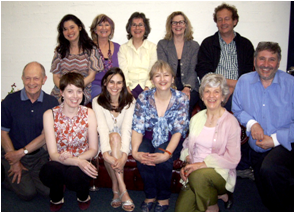
Some recent Certified Practitioners at
the PIM
John De Bono (Chairperson,
Moreno Psychodrama
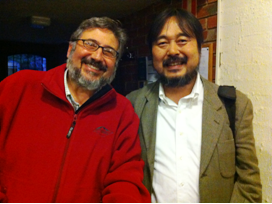
Society of Australia and Aotearoa) & Jun Maeda
(Japan)
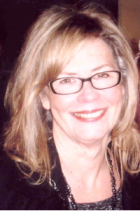
Sue Daniel
Sue Daniel conducted a
series of workshops
in Chennai from the 7-18 December 2012.The collaboration for this ongoing project is between
the IAGP and the
East West Center for Counselling and Training, with
Magdalene Jeyarathnam,
Director of EWCCT.Sue
led three
workshops: 1) A Three-Day Experiential Process Group: Through the Mirror, from 7-9 December, 2) A
Three-Day Psychodrama
Training Group: Developing
New
Perspectives from 10-12 December and, 3) A Five-Day
Intensive Psychodrama
Training Workshop: Being
in the Here and
Now from 14-18 December, the latter comprising part of
an Expressive Arts
Therapy (EAT) Diploma course between the Women's Christian
College, University
of Madras and the East West Center for Counselling and
Training. In addition
she gave 5 Lecture/Demonstrations on Psychodrama,
Sociometry, Sociodrama, Group
Psychotherapy and Group Processes on the 13th and 17th of
December at the
following Colleges and Universities, 1) Department of
Psychology, Women's
Christian College (WCC), University of Madras, 2) Dr. MGR
Janaki College of
Arts and Sciences for Women, 3) The Madras School of Social
Work (MSSW), 4)
Assam Don Bosco University (ADBU) and, 5) Justice Basheer
Ahmed Syeed College
for Women (JBASCW).The
organisation of
all of these activities and the generosity of the following
people was most
appreciated by Sue: Dr. Veena Easvaradoss, Head of
Department of Psychology
(WCC), Dr. Lydia Eric, Head of Department of Psychology
(MGR), Dr. Sheela
Hemalatha Julius, Head of Department of Counselling
Psychology (MSSW), Mrs
Rachel Kabi (ADBU), Dr. R. Subashini, Head of Department of
Psychology (JBASCW)
and, Magdalene Jeyarathnam and staff of EWCCT.
- - - -
July 2011: Sue Daniel (Founder of the Moreno Psychodrama Society
and Director of the Psychodrama Institute of Melbourne)
conducted a post-conference workshop "Concretisation Through
Psychodrama" 4 July 2011 in London following the British
Psychodrama Association Conference 1 -3 July.
Olivia Lousada (author of
Hidden Twins),
Sue Daniel (Melbourne), Marcia Karp & Maxine Daniels
(London) at BPA conferenc
Sue Daniel writes that she will be visiting Europe again
in February 2012 to work and attend the Board meeting of the
IAGP in Paris. At the present she is conducting research
on role reversal in supervision. The Psychodrama Institute
of Melbourne is celebrating their 10th year as an accredited
training institute on 22 July 2011.
Australia, continued
2008: The
website of the newsletter of the Australia-New Zealand
Psychodrama Association: http://socio.anzpa.org/ ... Full of
absolute treasures, including a YouTube of Moreno reading Words
of the Father. We at the
Australian and New Zealand Psychodrama Association (ANZPA) are
excited to announce that all articles printed in our Journal are
now available on the internet. You can subscribe to the Journal
electronically and order individual articles at low cost.
For those of you who have not yet seen it, the ANZPA Journal has
a focus on applied theory and practice of Morenian methods by
practitioners in Australia & New Zealand. Please check it
out. Go to <www.anzpa.org>
and click on Journal or on the cover image of the latest
Journal. Latest issue is No 16, Dec 2007. All
previous issues are also available.
The Island of Competence: Coaching When Judgement and
Shame is Present. Philippa van Kuilenburg. pp.1-8
Via Sponte: The Art of Effective Auxiliary Work. Marilyn
Sutcliffe. pp.9-15
The Internal Instrument: A Conversation with Lynette
Clayton. Dale Herron and Lynette Clayton. pp.16-20
Measuring the Efficacy of a Single Psychodrama Session.
Charmaine McVea. pp.21-28
The Lay of the Land: Medicine, Paradigm Change and
Psychodrama. Ali Begg. pp.29-34
Tatou Tatou e: Co-leading a Bicultural Workshop. Carol
Shand and Roberta Simpkins. pp.41-45
Becoming Jane: Appreciating Her Being and Becoming
Through Explorations of Role. Don Reekie. pp.46-54
Walking with Moreno in the Organisational Jungle. Jane
Morgan. pp.55-60
Role-Play: Realising its Potential for Workplace
Learning. Jenny Hutt. pp.61-67
Working with Indigenous Community Leaders in Cape York.
Diz Synnot and Peter Howie.
To see the full list of contents & authors by issue, go to
<www.anzpa.org/journal-index>.
To
download
individual
articles
select
the
issue
you want from the drop down Product Category menu. - - - 2006: Annual Conference of the Australian
and New Zealand Psychodrama Association will be held fromJanuary
24-Jan 29, 2006, in Brisbane, with pre- and post-conference
workshops. website: anzpa2006conference@macquariehouse.com.au
or contact peterhowie@macquariehouse.com.au
This is the conference of the Australia New Zealand
association which represents our 300 members and 10 training
institutes. I know that many people are interested in
knowing more about how role theory has developed in
our region. Do come and meet with us. I know you will be
warmly welcomed.The ANZPA website is www.anzpa.org
Sue Daniel and Katrina Gaskin
at the Psychodrama Institute Melbourne ("PIM")
<pim@netspace.net.au> sponsored an International Morenian Psychodrama
Conference in Melbourne,
Australia in 10 - 13 March 2006 Sue Daniel, PO Box 371 , East
Melbourne, Victoria 8002 Australia . For more
INFORMATION, please contact:
Moreno Psychodrama Society (Australia)
Tel & Fax: (+61-3) 94163779 email: MorenoSociety@netspace.net.auwww.psychodrama-institute-melbourne.com - - -
Jan, 2005: The annual ANZPA Conference was held from7 - 11 April 2005 at
Hahndorf Resort in the hills near Adelaide, South
Australia. Conference theme: Reversing Roles: Daring
to Live in Shifting Light. There was a variety of
sessions, most of them experiential, exemplifying the use
of psychodrama, sociodrama, sociometry and role theory in
a wide range of contexts. There were also pre-conference
workshops led by: Ann E Hale Training
Interpersonal Perception;
Narelle McKenzie Working with Body in Psychodrama;
and post-conference workshops: Max Clayton: Producing Psychodrama from a
Broad Perspective ; John Faisandier: Applying Systems Thinking and
Psychodrama at Work.
The details are now on the ANZPA website. Check at http://www.anzpa.org/confadl/conference.html - - -
February 2004: Mario Cossa has been
traveling in Australia and New Zealand. Reporting on the recent
conference there, he writes: The Australian & New Zealand
Psychodrama Association (ANZPA) is an organization of
practitioners, trainers, and trainees in psychodrama and its
related fields who operate primarily in Australia and New
Zealand. It currently has 287 Australian and New Zealand
members and 11 from other countries. The 2004 ANZPA Conference:
an everlasting present - integrating experience, was held in
Christchurch, New Zealand in late January, 2004. About 150
people participated including visitors from overseas.
Pre-conference workshops were offered by Bev Hosking and Max
Clayton and post conference workshops by Ann Hale and Carlos
Raimundo. During the conference participants selected from
among about 40 workshops and presentations of papers, enjoyed
various social events including a Saturday night Dinner Dance,
and attended the ANZPA Annual General Meeting and Life of the
Organization session. The ANZPA 2005 conference is
scheduled for April 7-11 in Adelaide, Australia. Max
Clayton (Feb, 2003) writes: I am leaving Wellington, New
Zealand, and moving to Melbourne Australia. I can be contacted
through the Australian College of Psychodrama, 9 Palm
Avenue, Caulfield North, Victoria 3161, Australia.
(December, 2003): The Australian & New Zealand
Psychodrama Association, (ANZPA) now has about 18
TEPs, 60 certificated practitioners, 220 associate (trainee)
members. There are now 10 training institutes are accredited
by ANZPA. Please visit our website: http://anzpa.org
writes in October, 2010:
Psychodrama is very lively in Austria. Beside the psychodrama
psychotherapy training programmes at the two universities (
Donau Universität Krems and University of Innsbruck) there are
several training programmes for different focus groups
provided by the ÖAGG. Many psychodramatist are directng
groups in various fields (psychiatric hospitals, counseling
centres, child protection centres.....) but also privatly.
They work also individually with clients and can make their
living doing this.Research projects have been started, studies
are being done and good articles and books are published.It's
great to see how many conferences and meetings for
psychodramatists are held all over Europe. From my point of
view it is a very prosperous time for psychodrama.
- - - -
Michael Wieser <Michael.Wieser@uni-klu.ac.at>
writes
on
January
28,
2003,
that
psychodramatists
are generally organized within a special Section of Psychodrama,
Sociometry and Roleplay within Austrian Association of group
therapy and group dynamic (http://www.oeagg.at/psychodrama.htm)
. According to our website, we seem to have180 psychodrama
assistants and another 170 psychodrama directors. According to our
"new training system," we also have 30 advanced trainees in
psychodrama therapy and 31 psychodrama therapists. Journals: We
have a newsletter in Austria for all group therapists, called
"Feedback" : http://www.oeagg.at/feedback/welcome.html
As you know, there is a new German
Language psychodrama journal, Zeitschrift fuer Psychodrama und
Soziometrie, and it cooperates with the other more general
professional journal, Gruppenpsychotherapie und Gruppendynamik
(
http://www.vandenhoeck-ruprecht.de/vandenhoeck/zs/allgemein/gruppenpsychotherapie_allgemein.htm
)
and
also
our
more
general
organization.
http://www.oeagg.at/theoagg.htm
(English). For the last year I have been an editor of
Psychotherapie Forum
http://www.springer.at/periodicals/ which
includes articles from practitioners from all psychotherapy
schools. (Soon I will travel to China and give you
some feedback of what I find out there about psychodrama and
psychotherapy. I'm also working on a report on research in
psychodrama in Austria.
May, 2001: Michael Wieser
<Michael.Wieser@uni-klu.ac.at> writes: The Austrian
Association of Group Therapy and Group Dynamics (OEAGG) (Website:
http://www.oeagg.at) has a special sub-section for Psychodrama,
Roleplay and Sociometry which has 386 members. This is the sum of
trainees, graduates and trainers. There are only two other
Training Institutes, one at the University of Innsbruck, led by
Dr. Jutta Fuerst along with 5 other TEP level trainers. Another is
the Institute for Roleplay Training led by Dvorak and Maria
Spongher-Schonherr (Email:
<w.sponger@aon.at>. In OEAGG, there are 12
Trainers that would be at the equivalent of TEP, and some
lecturers.
Balkan: Yugoslavia, Croatia, Macedonia, and
especially Trans-Cultural Training Days: See Yugoslavia.
Baltic Area:
2012: Inara Erdmanis ( ina.erd@bredband.net ), a senior
trainer from Sweden, also trains in Latvia. She writes: Just now I
am leading a CP education , a lively program scheduled by the
Latvian Moreno institute for ongoing training for people in
training for Certification. Each seminar has been or will be for
20 hours each! More details below. In the Latvian program, we have
trainers from abroad, and also 4 students from the Tallinn
(Estonia) school who attend as part of their CP-training program
and 3 students from the Lithuanian PD Association.
In Estonia there are 2 Institutes, one in Tallinn and one in Tartu
and both belong to Nordic Board of Examiners. In Lithuania the
Psychodrama Association there arranges for their training through
the Psychodrama Institute for Europe (PifE). The Lithuanian
Association and the Tallinn School and the Latvian Moreno
Institute are full members of FEPTO. Beyond the training program
for the CP level, we have 4 people who have already attained that
level and are taking the TEP (trainer) test in the Fall! We thus
offer both a leader education and a basic training program in
Latvia. .
= = =
In November, 2011, there was an introduction to
the program by Inaara Erdmanis.
In February, 2012, there was workshop by Eva-Karin Strom—a TEP and
psychiatrist—, titled "Mentalisation: Why aren’t you like me—or
are you?" This refers to the skill of seeing oneself from others’
viepoints, and also to see others from how they see
themselves—i.e., role reversal. It is a natural function that is
normally refined from birth to old age—but many don’t refine it
very much. Psychodrama has many tools to help with this process
e.g. role reversal and different kinds of mirroring. We will
explore the concept of Mentalisation both from theoretical and
practical aspects. Recommended literature: Ed. Jon G. Allen
& Peter Fonagy: Handbook of Mentalisation-Based
Treatment.
In May 2012, Kate Bradshaw-Tauvon, a Swedish
TEP/psychotherapist, presented a weekend workshop on "Shame, Pride
and Relationships". What do you do when your eyes encounter
an appealing stranger? Smile encouragingly? Pretend
indifference? or, even more sadly, avert your eyes in
embarrassment? A short presentation of Donald L Nathanson's work,
exploring shame and pride, the concept of self and the
pre-conditions for loving relationships, will warm us up to the
experiential work of the group. We will consider how nine basic
affects shape our sense of self. " Recommended literature: D. L.
Nathanson: "Shame and Pride: Affect, Sex, and the Birth of
the Self"
In later August 2012, August 23-4 (pre-conference) followed
by August 26-8, 2012, they are hosting the “Baltic Moreno Days”
Conference.
Then on the weekend of October 19-21, Mark Treadwell, TEP, is
offering a workshop on Surrealism and Psychodrama: "Looking
through a different mirror." He says (for the program),
“Psychodrama in itself is a wonderful method for exploring our
inner feelings and our
surroundings. Surrealism is an art form that distrusts the
natural conformity of the mass culture. Each of us has undisclosed
pictures, dreams and wishes that often do not conform to the norm.
This does not mean that these images are any less valid or
important than others; it simply means that society might have
problems fitting them into a pre-selected category. Combining the
theatrical playing out offered us through Psychodrama and the
freedom to accept our own inner distorted images is magic. This
seminar offers each of us this room. Surrealistic Psychodrama was
started in the early 80s and has continued to grow. We will
look at surrealistic images of today and also the established
warm-ups from the original Surrealistic Psychodrama experience.”
Inara writes, I’ve continued to work with the students this summer
of 2012 and indeed am doing so as I write to you.
Next year, in 2013, on the weekend of February 22-24, Christina
Citron CP/psychatrist, will present on "Incest and sexual abuse"
Psychodrama is very useful in the therapeutic work with trauma
patients. To go back to the traumatic event mirroring it in a
psychodrama and then be able to undo and redo the experience has
an astonishing effect on flash-backs and nightmares. In this
seminar we will approach the subject gently. We have all had
experiences that still hurt us and we can adapt the work to that.
Many have suffered from violence and sexual abuse and if so there
will be possibility to work with that. My theoretical frame comes
from different clinical sources
(among others: Anne Bannister; The Giaretto Clinic in San Jose,
USA; Judith Hermann;
Helen Johnsen Christie; Peter Kellermann; Babette Rothschild;
Suzanne Sgroi and Bessel Van der Kolk).
Recommended literature: Kellerman, P.F.
& Hudgins, M.K. (2000) Psychodrama with trauma
survivors. Acting out your pain. London. Jessica Kingsley
Publishers. If you work with children: Bannister, A. 1997.
The Healing Drama. Psychodrama and Dramatherapy with Abused
Children. London. Free Association Books.
In May 17-19, 2013, Mark Wentworth will present his method
"Dynamic Theatre " which is an action-method of spontaneous
representation inspired by the ancient use of theatre, ritual and
storytelling as a way of conveying information and wisdom between
one world and another. When we allow ourselves to become the
impossible and the invisible, we find the need to create and
inspired action fills our whole being, and he who "plays"
impossible and invisible becomes totally seen and wholly embodied
with the gifts to create his own world. Dynamic Theatre is said to
be the place where heart and soul merges with the greater
community.
On the weekend of August 23 - 25, 2013, Eduardo Verdu, TEP: "The
use of Morenian action methods within organisations".
The use of Morenian action methods are very
useful in organisations in teambuilding / management training /
conflicts in teams. However we need to be very cautious and alert
in how we implement these methods to peoples professional life.
What considerations must be made? How do our role as
psychodramatist differs when working in an organisation rather
than in a therapeutic setting? In this seminar we will focus on
how we could handle conflicts in teams.
One more trainer may be invited at the level of Certified
Practitioners. There will be totally 10 seminars with me and with
qualified trainers from abroad. Then some other participants
will be invited. Each seminar will cost 150 Ls. Those who
just take part in one seminar pay 190 Ls.
Requirements: Leader examination and Psychodrama practice during
two years. Level: Professional training and supervision; Hours:
700 hours (500 h leading own groups, 100 h.
supervision case supervision, on-site supervision,
diagnostic supervision)
Title: Psychodrama Director CP. Examination: Written examination
for a whole day (following areas of Moreno's psychology: History,
Philosophy, Methodology, Sociometry, Ethics, Research and Related
Fields). And « day one site with a TEP from an other institute.
More information: www.psihodrama.lv
www.psykodramastockholm.se Baltic Region:
<andres.sild@morenokeskus.ee> Announcing the 4th Baltic
Moreno Conference on the theme “Everyday Values” on August 24-27,
2006 in Tallinn, Estonia. Speakers include Päivi Ketonen, Tuuli
Vellama, Pille Isat (applications in education); Sue Daniel (..in
organizations); Sirkku Aitolehti, Kirsti Silvola, Harri
Stenberg (..in therapy); Henna Merikivi and Raimo Niemistö, Inara
Erdmanis and Kate Bradshaw-Tauvon, Sue Daniel, leading
sociodramas; a lecture by Leif Dag Blomkvist–and 15-20 different
workshops, along with Playback theatre. Early registration price:
120 Euros for the pre-conference, and 100 Euros as the Conference
fee. For conference information and registration go to www.morenokeskus.ee or
E-mail: konverents@morenokeskus.ee
-
-
- Viktorija Vaisvilaite writes from Lithuania,
<viva@centras.lt> : The "Baltic Moreno Days" conferences
involve people throughout the region. The first was held in
Piarnu, Estonia, in 2000, and the second in
Jelgava, Latvia, in 2002, and the the 3rd
Baltic Moreno Days conference (Theme: Awakening) was held in
Klaipeda University, Lithuania
August 26-29, 2004. (The
website of Lithuanian Psychodrama Society is: http://psichodrama.tinklapis.lt
) (See News of Lithuania on
another webpage)
"Inara Erdmanis" <ina.erd@bredband.net>
wrote and noted that this conference happened 2 weeks after the
international conference in Oxford. This Baltic conference was
attended by 120 participants from 10 differnt counties, including
Latvia, Sweden, Norway, Australia, Germany, Israel, Estonia and
Lithuania. Every day started with a wonderful puppet show to opera
music and the evenings ended with Concert by Vilnius String
Quartet and a Jazz Concert. During the days 14 different worhshops
were offered with leaders from the various countries. (Inara is a
TEP in Sweden and also directs the Latvian Moreno Institute
-
-
-
- (2005):
"Inara Erdmanis" <ina.erd@bredband.net> writes: The
Nordic Board of Examiners in Psychodrama (NBBE) includes the
following institutes: Swedish Moreno Institute, Norwegian
Psykodrama Institute, Finnish Moreno Institute, Helsinke
(Finland) Psychodrama Institute, Tallinn Psychodrama School
(Estonia), Latvian Psychodrama Institute and Stockholm
Psychodrama Institute.The Board meets at least ones a year
and next time will be in Riga. Chairwoman is since many
years Riitta Hiillos-Vuorinen from Finland.
Bangladesh:
Herb Propper (far right)
leading a class on psychodrama, late 2009.
December, 2009: Herb Propper Ph.D., T.E.P is in the midst of a 5-month
Fulbright foreign teaching exchange scholarship to Bangladesh
(with 2 side trips to Chennai, India). His visit will end
Feb. 15, 2010. He is teaching 2 university courses, one an
introduction to clinical psychodrama and sociometry for graduate
clinical psychology students at Dhaka University, the other an
introduction to sociodrama, sociometry and living newspapers for
4th year honors undergraduates in drama at Jahangirnagar
University. He is also offering several 3-day workshops for
a local NGO, Ain o salsih kendra, and the Dhaka University
student counseling staff, in addition to occasional demonstration
sessions and personal psychodrama therapy by request. Here's his brief report:
National Therapeutic Theatre Workshop '09: about the Trainings in Psychodrama,
Sociodrama and Sociometry in January 2009, held under the auspices of The Bangladesh Therapeutic
Theatre Institute [BTTI], a wing of United Theatre for Social Action [UTSA], in
Chittagong: 4
different workshops, with a total of 88 participants, for a total of 66 training hours. At Dhaka
Ubiversity Clinical Psychology:, there is considerable growing interest in
psychodrama and sociometry in this department. This year's
workshop was attended by 19 graduate students (12 with previous
experience) and 5 faculty, including the current chairman, the
previous chairman and the founder of the department (Ph.D., U.
of Vienna). The previous chairman also attended the final
workshop at SPED, and has expressed considerable interest in the
possibility of studying psychodrama abroad and eventual
certification. He has also inquired about supervision for
incorporating action methods into current practice. In a recent
weekend field visit to a home for single mothers, children and
adolescents by the previous chairman and students were joined by
one of the BTTI core members, who demonstrated uses of basic
sociometry, role-playing and sociodrama.
The Dhaka Therapeutic Theatre Practice
& Study Group (DTTPS) has been meeting regularly bi-weekly
since late August. It is coordinated by 3 BTTI core
members, who have currentlyearned between 150 and 285 training
credit hours. Group size has varied between 4 and
12. Each session begins with sociometric warmups and
includes practice in role-playing, simple sociomdrama and
playback theater forms. One coordinator
sends session reports. In the next weeks
I will be starting direct supervision and processing sessions
using SKYPE videoconferencing.
For those in the city of Chittagong who have reached a more
experienced level of training, for the first time I was able to conduct a
workshop in which all participants had attended a minimum of two
previous workshops, including 5 participants who now have from
135 to 285 training credit hours. Due to these conditions
there was much more focus on students taking the director role,
on related process discussions, and on higher level discussions
of conceptual frameworks.
There has also been a
connection with Counseling Center of Chennai, India, where I recently made
contact with the founder/director there.. <www.centerforcounselling.org>.
She
holds
an
M.S.W.-Psychiatric
and
has
specialized
in counseling for HIV/AIDS and substance abuse.. She has
done extensive international training and program development in
South Asia, as well as program evaluations throughout
India. She is
very enthusiastic about psychodrama and attended all four of the
NTTW'09 workshops. We have already begun individual
tutorial/supervision via Skype videoconferencing, and are making
plans for a training visit by me this coming autumn. Chittagong University
Psychology Department is still new, having begun in 2006. There are currently only
undergraduate students in the 1st, 2nd and 3rd years of the
curriculum. The chairman is a graduate of the Dhaka U.
Clinical Psychology program (in fact, a classmate of one of the
BTTI core members). The workshop itself was introductory,
on a level appropriate for undergraduate students; the group was
large, totaling 26. What was most notable, however, was
the presence of 4 BTTI core experienced trainees. This
allowed us to work very comfortably as a team. The
trainees directed all spectrograms and locograms except the
initial one. They also assisted with translation,
explanations of concepts and details of exercises, and coached
small groups in doubling and role-taking. One of them, who
had worked with me as both translator and 'director's Bengali
double' in previous visits, was my co-director for a
psychodramatic photograph vignette. - - -
2007: Herb Propper ( socitele1@verizon.net )
writes: Starting in 2003, I’ve been back to Bangladesh, just East
of India, five times, beginning to develop training in
psychodrama, sociodrama, sociometry, and theatre for social
change. This last visit was from May 23 to June 11, 2007, and involved around 5
different workshops, titled the “National Therapeutic Theatre
Workshops 2007,” and held under the auspices of The Bangladesh
Therapeutic Theatre Institute, a wing of Unite Theatre for Social
Action, Chittagong. These were attended by about 82 participants
in all.. For the first 3 trainings, in Dhaka and at
Jahangirnagar University, I was co-leading with Joan Murray,
trainer from Psychodrama Institute of Melbourne. Sue Daniel, the
head of PIM has become a very strong supporter of this project.
(Because Joan had to return home unexpectedly, I lead the 2
trainings in Chittagong by myself.) Including other trainers
allowed Bangladeshi trainees to experience a wider range of styles
and approaches. There are already further prospects for
visits by other trainers, including a workshop already scheduled
in Chittagong July 25-28.
There is now an emerging core of people
with solid beginning training experience. These people have
accumulated anyway from 50+ to 120 experiential training
hours. They show a good grasp of the basic methodology
and conceptual foundation of psychodrama and
sociometry. This was dramatically demonstrated by the work
of the 6 student directors in the Chittagong workshops, whose
ability to direct a spectrogram, barometer or locogram from
generating criterion through sharing was impressive. They
and others are beginning to facilitate their own learning through
practice sessions between trainer visits and to apply pieces of
the method in counseling or non-governmental organization (NGO)
community work. The presence and impact of The Bangladesh
Therapeutic Theatre Institute is growing. There is now a
strong core of both interest and experience within the Clinical
Psychology Department of the University of Dhaka, and the
Dramatic Department of Jahangirnagar University. There is
also interest at Rashshaji University (another provincial capital)
which could not be developed on this particular visit, but is
definitely a prospect for the future.
The creation of
a Yahoo e-group, “psychodramabd” (bd for Bangladesh) by a faculty
member of the Clinical Psychology Department, Dhaka University,
has also begun to provide trainees with wider access to essays and
internet materials. I am also beginning to provide some
email supervision to trainees with significant experience who are
using some pieces of methodology in their work. The host
organization is Unite Theatre for Social Action (UTSA),
executive director Mostafa Kamal Jatra website: <http://www.utsa.up.to/>
During my previous visit last
August, we formally began the fledgling Bangaldesh Therapeutic
Theatre Institute (BTTI). Because of our strong
continuing connection with BRCT--- Bangladesh Rehabilitation
Centre for Torture Victims--in Dhaka, the BRCT also formally
instituted its "Institute for Psychodrama Research and
Rehabilitation" see their website:
<http://www.brct.org/> Bolivia: May, 2001:
Violeta Firestone <firestones@scbbs-bo.com> writes: Economic
conditions are hard right now. We have about eight
psychodramatists here in Santa Cruz de la Sierra Bolivia, and
about fifteen students who are in training. There is a small
organization here. We use training materials from both Brazil and
Argentina
Brazil:
Dalmiro Bustos
writes in January, 2010: We have 80 students in our two
institutes. The directors with diploma are 198. Many have opened
their own training programs (cańt tell you how many) people come
from Argentina, Uruguay; Brasil, Equador, and Chile in a monthly
basis others every other week. They usually stay for a whole day.
Some even come from Spain and Italy and stay in all the training
groups for a month or so. Hope this data helps in your work. Also,
this newly published book:
Bustos, D. & Noseda,
Elena. (2008). Manual
of psychodrama in the fields of Psychotherapy and Education
Buenos
Aires:: Ed Vergara
- -
2008: Zoli Figusch has just published a new cd-rom e-book: From one-to-one psychodrama to large
group socio-psychodrama: More writings from the arena of
Brazilian psychodrama. Manchester, UK:
Self-published Ebook in CD-ROM format. All chapters have been
translated by the editor into English. The book is now
ready and available to ship. The CD cost: to the
USA: $30 (US Dollars) plus $4 (US Dollars) for
postage and packaging. (Cost to other countries, and to order,
email to: figusch@hotmail.com
Jose Fonseca Jr's book was published, in English in the
Spring of 2004, from Brunner-Routledge publishers: Contemporary
Psychodrama: New Approaches to Theory and Technique.
<jfonseca@nw.com.br>
2001: Heloisa Fleury
<hjfleury@ig.com.br> writes: On March 21, 2001, in the city
of Sao Paulo, the largest one in Latin America, with a population
of 16 million (!), was the scene of a mass sociodrama–or, as Jose
Fonseca noted, these also had an element of axiodrama– on the
theme of “Ethics and Citizenship.” 700 psychodramatists (!)
directed in 180 street and indoor (in libraries, schools and other
public forums), open-free-to-the-public sociodramas in 96 city
districts about issues in the life of the community. An estimated
8,000 citizens participated. The programs lasted 2 to 3 hours.
There were small and large groups, with 10 to 600 participants
present at each sociodrama. It was an incredibly powerful
experience for myself, and all my fellow psychodramatists, a
unique time of being close to people who voiced their feelings of
sadness, lack of power, humiliation, happiness, and, at the end of
these sociodramas, their hope for better times. The Mayor of Sao
Paulo, Marta Suplicy, who supported this project, and apparently
has had some psychodrama training herself, participated in
one of the scenes, taking the role of a victim of violence. Marise
Greeb was in charge of the event There are not enough words
to allow us to express the special magic of this experience.
Videos, photographs, and written reports produced a wealth of
material for further study. I think I can speak for all of my
fellow Brazilian psycho-dramatists when I say that it touched us
in a way that pierced our hearts and we will never be the same.
May I am so bold as to say, perhaps it is the new history of
Psychodrama here in Brazil. Maybe the world.
Britain (Great
Britain, UK): See England (at the bottom of this webpage)
Bulgaria:
September 2010: Malen Malenov, a psychologist and
psychotherapist writes: This year we in the Bulgarian Psychodrama community
are celebrating our 20th
anniversary! There has been quite a lot going on in the recent
years. In 2007 and 2009 we had our first two national
conferences with more than 220 participants and about 20
different workshops at each. There are currently 3 training
institutes members of the Federation of European Psychodrama
Training Organizations (FEPTO) with 2 new applying for
membership. Since 2002 a Masters degree programme in Psychodrama
and Creative Action Methods is part of the curriculum at one of
the biggest national universities. Psychodrama self-experience
groups are also offered as part of clinical psychology and other
university courses. The national umbrella association – The
Bulgarian Society for Psychodrama and Group Therapy (www.psychodrama-bg.org) has now more than 200 active members.
The method is well represented in the national Association for
Psychotherapy where many of the qualified members are trained
psychodramatists.
Psychodrama
is
used
in
a
range
of settings, including psychotherapy, organizational
consultancy, working with marginalized groups, addiction
treatment, supervision, etc. Unfortunately health-care
system remains quite inaccessible and reserved. The lack of
funding and the primate of biological psychiatry results in
most psychodramatists organizing their groups in private
practice while patients / clients in psychiatric settings
scarcely have any access to psychotherapy. Still, the
interest for psychodrama self-experience and training
remains relatively high among psychology, social work and
other mental health professionals.
The advisory board of the Society is currently working on
updated guidelines for training and a handbook with articles
to be published by the end of the year.
- - - - -
Evgeni Genchev (email: genchev@geobiz.net
) writes in January, 2004: There is not much organizational life
here. Some young psychodramatists went to the Istanbul IAGP
congress. We know about the London meeting, but as for everything
else finances are a great problem here. It's quite difficult to
make ends meet and travelling abroad is too hard. There are about
7 trainers doing active training groups. So apart from Galabina's
"Orpheus" and my and David's Psychotherapy 2000, there are several
new trainers. We have already about 20 home-made
psychodrama-therapists. So you can see we are still mainly in the
training period. David is leading, already for several years, a
social program called: "Art for social change", which is training
actors and people with background from different arts to work with
orphan children in institutions, for their psychological
development. So it's not exactly psychodrama, but using play and
acting and other expressive art for the children's development. I
believe this is the new promissing development in trying to bring
psychodrama "to the streets".
:Genchev;Evgeni tel;cell:098397880
tel;fax:+2/517886
tel;home:+2/9813490 tel;work:31 Angel Kanchev
Str, Sofia 1000,Bulgaria
org:ACET adr:;;7-9 Zvanika Str., 1st fl.;Sofia
Bulgaria
In August, 2004
Malen Malenov of Bulgaria writes: <malen_malenov@yahoo.com>
Announcing a new Bulgarian website: http://actinplay.cult.bg
the
web-links
section
of
the
site
is
one of the few bilingual sections:
http://actinplay.cult.bg/cncat_en/. (Just ignore the first
half of each paragraph and read the English texts.)
Our Bulgarian website for Psychodrama and Creative
Action Methods (in Bulgarian for the time being). Contains
introductory articles as well as specialized papers, interviews,
news, workshop and conference announcements, calendar of events,
weblist, forum, chat and more. By now we have published articles
and interviews by Jacob L. Moreno, Adam Blatner, David Kipper,
Marcia Karp, Sue Daniel, Felix Peter Kellermann. Forthcoming:
interviews with Grete Leutz, Chris Farmer, Chantal Neve-Hanquette,
Jorg Burmeister, Jose Fonseca, Christer Standahl. We will also
attempt to translate the site in English, bit by bit.
Thank you and best regards, Malen Malenov
16, Yanko Zabounov St., bl.50
Entr. B, Floor 3, Flat 49
1408 Sofia - BULGARIA Tel: + 359 2 961 19
24; Mob: + 359 888 835 976
E-mail:
malen_malenov@yahoo.com
http://actinplay.cult.bg
Canada:
(2005) Elizabeth White,
M.Ed., T.E.P. (email to: lizwhiteinaction@rogers.com
, www.lizwhiteinaction.com
writes:)
I am happy
to announce the development of the Saskatchewan Centre for
Psychodrama in western Canada. Centred in Saskatoon and Regina, on
the Canadian prairies, the centre offers four psychodrama training
events each year. Some examples of programs: (1) a two-day
workshop: Turning Points: Finding Freedom and Rites of
Passage; 2) one day workshop, "If Only..,." Action methods
and the Seasons of Mourning; 3) Residential four day workshop at
Manitou Lake SK, Who am I really? Life Inside and Outside the Box.
As all workshops are led by a TEP, hours of attendance may be
credited toward American Board Certification. For more
information, or to add your name to the emailing list, contact Liz
White at the email address above or at (416) 481-3738 or, in
Saskatchewan,
Louise Handford, at lmhandford@accesscomm.ca Chile, May, 2001:
Paolo Durán U., of the Center of Psicodrama in Chile, located in
Santiago (email: <centro_psicodrama@yahoo.com> writes:
Approximately 10 people are doing psychodrama in our country. We
have a small "Escuela de Psicodrama de Valparaφso" in that
city. Four of our people were trained in Uruguay, and four are at
the trainer's level. In 1995, the director of the School of
Psicodrama of Valparaiso begins to spread the psicodrama to the
university level. We are the pioneers in this methodology. We look
forward to more international contacts.
China
(Mainland):
2008: Kate Hudgins, Ph.D., TEP, has been active in the last few
years in China and returns there April 15- May 20, 2008, to
conduct 4 TSM workshops. There will be a Personal Growth
workshop in both Beijing and Shanghai where over 100 people are
expected for each workshop. She will then go to Huaqiao
University in Southern China to conduct her seminal workshop on
Containment: The Key to Safety with Action Methods. Kate will be
a visiting professor at Huaqiao University starting in the Fall
of this year. Finally, Kate returns to Nanjing to conduct a
Leadership and Directing group for Level 3 students. TSM China
is growing by leaps and bounds and will be opening a Training
Institute this Fall in Beijing. Kate is starting two joint
ventures with Chinese colleagues. TSM China will market and
develop all Therapeutic Spiral Model workshops and Action
Solutions China will brand, market and develop the business
applications of TSM. Look for a big media campaign starting the
summer.
Therapeutic Spiral Method (TSM) Action
Trauma Team at a workshop at Shandong University in
Eastern China. These are professors and psychologists who
are advanced in their TSM training (i.e., for several
years!), with Kate Hudgins, the main trainer, in the
front, middle. They have reached the levels of Team
Leaders, Assistant Leaders and Trained Auxilaries and have
traveled to this workshop from where they live and work in
Beijing, Shanghai, Nanjing and even Taiwan as well as
Shandong.
Also, Dr. Hudgins' book Experiential Treatment of PTSD
(Springer 2002) will be translated by the Ministry of Education
for the large (5000 people) psychology conference in Beijing in
October 2008. Kate and her team of Professors Ruby Shi, Sang
Zqhain, and Deng Xuloung will conduct a two day pre-conference
workshop followed by several TSM workshops.
-
-
-
-
2007: The 1st international expressive art
therapy and psychodrama conference in the People’s Republic of
China (on the Chinese mainland) was held in the city of Suzhou
(just west of Shanghai) on August
4-7, 2007, and attended by 385 professionals and
students. The theme was: “Building a harmonious society through
convergence of east-west cultures and psycho- social
development.”
Currently, expressive art therapy and
psychodrama have become two branches of the main modalities of
psychotherapies in China. Organized by Shu Gong and local
dignitaries, it was the culmination of a persistent effort
initiated by her in the early 1990's. Shu Gong brought
Psychodrama to China and paved the way for Zerka Moreno to lead
workshops, the most notable of which was the one on the Great
Wall, near Beijing.*
Suzhou, the host city of the
conference, known for its classical gardens, canals and bridges,
is dubbed "The Venice of China"; it was a superb location for
this wonderful gathering,. It was a great opportunity to
present, teach and connect with Chinese and other Asian
colleagues and students. Most of those attending were
Chinese psychologists, counselors, educators and human resources
professionals. The four-day Conference began with keynote
speeches and presentations by Gong Shu (that's her name in
Chinese), Fan Fumin, Yamanaka Yasuhiro, Marcia Karp (UK)
and Jorge Burmeister (Switzerland—he’s also the president-elect
of the International Association of Group Psychotherapy).
Non-Asian presenters came from various countries: Michael Wieser
(Austria); Kate Hudgins (USA) (who has been pioneering with her
Therapeutic Spiral Model—TSI—at a number of centers in mainland
China); also from the USA: Merri Goldberg, Jacob
Gershoni, Ed Schreiber and Adam Barcroft; Natasha Navarro
Roldan (Spain); John Devling, Kate Hill (Australia); Elisabeth
Koeberl and Elke Normann (Germany); Yaacov Naor (Israel); and
Jorge Burmeister Hudgins & Schreiber also
hosted a reception.
more: http://www.sungfamily.com.cn/hr/
or email to Dr. Tao at <dreamy1029@yahoo.com.cn>
.
-
- -
-
Dr Kate Hudgins" <drkatetsi@mac.com> also reports that: I
presented at the August conference in SuZhou an Introduction to
the Therapeutic Spiral Model to Treat PTSD: A Cross
Cultural Perspective with my team Ruby Shi, Deng Xuloung, Fei
Jung-Fei and Sang Zqhin. We were very well received.
Meanwhile, what else is happening is that I now have 5 centers
in China where we are building teams---Shanghai, Beijing, Jinan,
Xiamen (in the South) and Urumqi (in the West). My training
insitute TSI, Therapeutic Spiral International, is forming
strategic partnerships with local psychological centers to
provide TSM training in experiential psychotherapy using
clinically modified psychodrama, EAP and business consultations.
We are also doing private dramas where people contract for a
small team to do their own work given the limits of
confidentiality in China. (That is because all the workshops are
taped for review by the government for subversive material!)
Peter (Dummett, MBA) and I did a workshop on dating in Shanghai
last month and that was fun. In mid-2007, I will have spent 8 months in China
and Taiwan this year by the time I return home Nov.
15th. For more information: www.therapeuticspiral.org
- -
- -
- - Hettie Tu (
happyhettie@yahoo.com.cn ) reports in March, 2007, that she has been promoting
psychodrama in Shenzhen (a city near Hong Kong with 7 million
people!) since 2002, as a student and translator for the
Australian trainer, John Devling. Since that time, she has also
organized workshops in Taiyuan (a city of 3 million in Shanxi
province, northeast China), Zhuhai (a city of 2.8 million in
Guangdong province in the southeast), and so far a total of
150-200 people have attended.
Deng Xuyang, M.A. (email: dengxy_hai@sohu.com) teaches
psychology at Southeast University Psychological Counseling
Center in Nanjing: After Dr. Michael Wieser of Austria presented
on psychodrama around February, 2003, about 45 people have continued to be
interested. 8 students and 10 colleagues in university, 10
colleagues in high school seem to be more than a little
interested in psychodrama. We are also in Jiangsu Province, in
eastern China, near Shanghai. There was a previous exposure to
psychodrama several years ago when Zerka Moreno and Gong Shu had
visited and taught at the Nanjing Brain Hospital a few years
ago. A few of us are presently using psychodrama with patients
in psychiatric settings in Beijing, Shanghai and perhaps other
locations in China. Here, we have started a program using
psychodrama with 10 female criminals once a week for three
months at the Nanjing Jail, selected because they also have
mental disorders such as depression, anxiety,
obsessive-compulsive disorder, and/or suicidal ideation, as well
as their underlying personality disorder. So we are interested
in our international colleagues' experience in this regard.
China: Gong Shu
<gong@artsci.wustl.edu> June, 2004, that she has her book published. Yi Shu: the
art of living with change--integrating traditional chinese
medicine, psychodrama and the creative arts. (City, state):
F. E. Robbins & Sons Press. (Printed in Taipei). ISBN is
0-9666168-7-1, to be in both hardback and softback. The
price is to be determined yet. There are more than 80
colored pictures, mostly client's work in case studies. In English
(To be translated into Chinese.)
In March, 2004, I presented a
workshop in March at Nanjing Traditional Chinese Medicine
University (in mainland China). This was an integration of
traditional Chinese medicine, psychodrama and the creative arts
attended by 92 professionals, and was a great success, in part,
because I understood the culture, many of the dialects and their
subtle implication and jokes. I have a one day workshop on June 28
here in Taipei at Taipei medical University. The event is
sponsored by the Department of Education. The enrollment
limited to 500 people is full. I will also go to Malaysia
and China. The Malaysian workshop is sponsored by the oversea's
Chinese association. The China workshop is sponsored by
Nanjing University.
The International Zerka Moreno Institute also
includes, in Argentina : Monica Zuretti; in Asia and U.S.A.: Gong
Shu; Turkey: Deniz Altinay; the Netherlands: Renee Oudijk; West
Africa: Jon Kirby; and as consultants: Marcia Karp (England)
Greta Leutz (Germany) Cheng Zu Chang (Taiwan), and Lewis Yablonsky
(U.S.A.), among others.
A large conference was
planned for 2005, but the resources didn't work. Yet the spirit is
there. In 2006, efforts are being made to translate Blatner's two
texts into Mainland Chinese. See Republic of China (Taiwan)
under Taiwan. Costa Rica. November,
2010: Ursula Hauser
writes: Last month we held the First National Congress of
Psychodrama in Costa Rica; we felt it was a great success, hosting
about 90 persons, mostly young students. At this time, around 40
psychodramatists are active in Costa Rica. Training has been
through ICOPSI institute ( www.icopsi.org
), that I founded in 1999 together with colleagues.
At the congress I presented
on the histoiry of psychodrama in Costa Rica, and I will also
present that at the 8th
International Ibero-American Psychodrama conference coming
up on May 14-19 in Havana, Cuba (at the National University).
(I also have been proud of our work in
Gaza, Palestine, where 9 psychodramatists graduated from training
this month.) Croatia: Aleksandra
Mindoljeviæ (email: danko.drakulic@zg.t-com.hr
) writes (in April, 2007):
In Croatia psychodrama was introduced in late
1970s at the Clinical Hospital in Zagreb after the return of
professor Stanisa Nikolic, a child psychiatrist and psychoanalyst.
Dr. Nikolic was a student of Prof. Dr. Serge Lebovici, in Paris.
(Lebovici was one of the main pioneers of psychoanalytic
psychodrama, which is quite different from Morenian psychodrama.).
Dr. Nikolic introduced analytical form of psychodrama which is
still being used today. I (Alexsandra) was a pupil of Dr. Nikoic
and in 2000, I graduated permanent professional analytical
psychodrama training under the supervision of prof. Nikolic.
In 2001. I met Dr. Vladimir
Milosevic, psychiatrist and (Morenian) psychodrama trainer in
Belgrade and after some time we decided to organize Morenian
psychodrama training in Croatia in Zagreb (under the supervision
of YUPA- Yugoslav Psychodrama Assoc. and EAP-European Assoc. for
Psychotherapy).
In 2003, the Croatian
Psychodrama Association (Hrvatsko Psihodramsko Drustvo) was
founded (at the School of Medicine Zagreb University where I have
been working for ten years), and a year after we organized An
International Psychodrama Seminar - The Third Cross Cultural
Psychodrama Training Days—Theme: "The Group As a
Microcosmos"—which was under the
auspices of the President of the Republic of Croatia Mr. Stjepan
Mesic. It was a great opportunity for promotion of Morenian
psychodrama for the very first time in Croatia.
In scientific committee
there were Maurizio Gasseau, Vladimir Milosevic, Peter Haworth,
Oded Nave, Stanisa Nikolic, Susie Taylor and me. 120 participants
came from 10 different european countries. Of course, there were
many participants from Croatia as well, and some of them decided
to apply as a Morenian psychodrama trainee.
Nowadays, we have two
groups of Morenian psychodrama trainees from all over Croatia,
from Bosnia, Slovenia and even one lady from Germany. All together
forty people, most of them are psychiatrist, psychologist, social
workers, actors and stage directors in theatres.
The trainers are dr. Vladimir
Milosevic, psychiatrist and Morenian psychodrama therapist,
director of the Psychodrama Institute in Belgrade (Serbia) who is
coming every month to Zagreb. Then, prim. dr. sc. Marija Cicek,
also child psychiatris (like Nikolic) and analytical psychodrama
therapist from Zagreb (she is retired two years ago) and prof. dr.
sc. Ivan Urlic, group analyst and psychiatrist from Split
(Croatia). Supervisors are Susie Taylor from England and
Slavko Mackic from Belgrade.
On May 12-16, 2007, the Croatian
Psychodrama Association is hosting an International
Psychodrama Seminar "Introduction to Psychodrama" which will be
held by Susie Taylor and everyone is invited! All those
information and some photos (of trainers, trainees, volunteers and
other) are at our CPA webpages: http://www.psihodrama.hr/
(In
the
Croatian
language—English
pages
are
not,
unfortunately, updated from 2005.)
These days I (Aleksandra) am writing and
finishing my first book about psychodrama. It will be a glossary
of psychodrama terms with 160 pages and about 150 terms connected
with psychodrama, psychoanalysis and group psychotherapy. At the
end of the book there is also a short chronology of psychodrama
history in the world and in Croatia as well, and a few photos of
Moreno. Although it will be in Croatian, I am hoping to translate
it into English some day.
Cuba: Ursula
Hauser
writes about the history of psychodrama in Cuba: A glance to
history:Although in the decades of the 1960s and further on
in the 1980s there have been different colleagues, mostly
from Argentine (Monica Sorin, Alicia Minujin, Mirtha Cuco),
who gave introduction courses and developed some activities
with groups and Psychodrama at the University of La Habana
in Cuba , but the interest from Cuban colleagues in group
methods for clinical , educational and community work
started to develop intensely during the eight‘ ´Encuentros
de psicoanalistas latinoamericanos marxistas y psicologos
cubanos’, from 1986-98. I only mention some of the group
specialists who actively participated en these Congresses:
Armando Bauleo (‘ Grupo operativo’), Eduardo Pavlovsky, Ana
Maria Fernandez, Ursula Hauser (Psychodrama), and many
colleagues more.
The systematic training in
Psychodrama started 1997, initiated by Ursula
Hauser with the Team of the COAP (Centro de
Orientación y Atención Psicológica), the
Polyclinic and Training Center of the
Psychological Faculty of the University La
Habana. This project was financially supported
by the Swiss NGO ´medi-Cuba suiza´, until 2010.
Until the year 2003 Dr.
Hauser trained 3 groups in Psychodrama Method, a
process which is documented by a Book ‘ Nuestro Psicodrama’
and a Video which served as didactic material.
In the meantime there exists also a DVD
Multimedia with the title: ‘Psicodrama y
compromiso social,’ resuming the experiences
until 2009.
Eight Psychodramatists were
graduated in the year 2006, who have been
further on the professors for the new group in
the MASTER Program, which started 2007 with 23
students on a interdisciplinary level. This
Post-graduate Study Program is called: ´MAESTRIA
EN PSICODRAMA Y PROCESOS GRUPALES’, and we could
graduate 2010 with outstanding success 21
Students. The Team consisted by the 8 Cuban
Psychodramatists, 4 Group Specialists and the
followinginternational
Professors: Eduardo Pavlovsky and Susana Evans,
Ana Maria Fernandez, Mario Buchbinder, Juan
Carlos Volnovich and Silvia Werthein, Jaime
Winkler and Maria Carmen Bello, Mario Campuzano
and Ursula Hauser.
Jorge Burmeister, Natacha
Navarro and Elia Ana Monge (Costa Rica) were
integrated in the professional examination Team
(Jury), together with Ursula Hauser and
Professors from the University of La Habana. At
present, the
trained group in Psychodrama and Group Processes
consists counts with 30 colleagues from
different areas of social science and
professional skills. They all have formed their
own groups in clinical work, community and
educational field, organizations and
institutions, and training groups with new
students. These experiences shall be published
in a documentary book, as soon as there is
financial support for it.
The culmination of the
3-years Master Program and the 15 year long
Psychodrama Training has been the recently
realized VIII Congreso Iberoamericano de
Psicodrama´ in La Habana, from the 14th-19th
of May 2011. The group of the thirty young
graduated Psychodramatists formed the
organizational committee of theCongress, and did a wonderful job. Almost
300 international participants and 150 cubans
assisted the congress, which became a excellent
experience and successful event for Cuba. As
post-congress activity a big group of 60
Internationalists travelled to Santa Clara and
realized a professional activity with almost 200
cuban students from different departments (Villa
Clara, Camaguey, Holgúin, Santo Espiritú).
During this Congress we
founded the ´RED PSICODRAMA SUR-SUR´ with a
ceremony at the José Martí Memorial in La
Habana, and in Santa Clara at the Memorial of
Che Guevara. A network of many Latin-Americans
and international group specialists, mostly
trained in Psychodrama, manifested their wish
and will to make this movement to grow and
become stronger, also including poor countries
like El Salvador, Nicaragua, and a little bit
farer away Palestine!
In the future, there
is
already planned a second and third group of this
Master program which ended with so much success
and interest, one group in La Habana, another in
Santiago de Cuba. As additional and innovative
project we plan for 2012 the realization of a
INTERNATIONAL MASTER PROGRAM, which is open to
participants from the Spanish speaking
countries, which have no opportunity in their
own country to get a integrative Training in
Practice and Theory of Psychodrama and Group
Processes. There is already a list of more than
20 interested students from Latin America.
Beside of this offer of a
International master in Psychodrama and Group
Processesin Cuba,
which is a concentrated program of 5 months and
includes as well group practice with different
populations in Cuba, there is the project
ongoing of a ´mobile Master program´ with the
Cuban Team of Professors in Center America. We
are in the process of making the coordination
with Universities in Costa Rica and the
University of La Habana, and we hope to start
this project in the year of 2013.
- - - -
May, 2011: 8th International Ibero-American
Psychodrama conference coming up on May 14-19 in
Havana, Cuba (at the National University).
Website: http://promociondeeventos.sld.cu/psicodrama2011/
May, 2001: Gillian Woodward, of England,
<gillian.woodward@talk21.com> traveled to
Cuba to teach. She writes: Gave an introductory
workshop on psychodrama to about 12 psychologists
at an International Psychology and Health
Conference in November, 2000, and has been invited
to go back again this year at the excellent Havana
Psychiatric hospital Denmark: (August, 1999): Ebbe Scheel Kruger
(ebbesk@mail1.stofanet.dk ) writes: Around fifteen years ago
we only knew of six psychodramatists: Bo Tendal, Ann Sury,
Marchen Muller, Ebbe and Else Marie Schultz Rasmussen, and
Lone Merethe Paavig, a psychologist–this latter now offering a
3 year training program in Hans Christian Andersen’s old town
of Odense. Now we have about 50 professionals who integrate
action methods, organized as a sub-group within the Danish
Psychology Organization. Most mix together some Gestalt
therapy, dance-movement approaches, or other experiential
methods. The organization, as it is, occasionally circulates a
newsletter. (The dominant style of most group therapists in
Denmark, though, still remains verbal and more conventional.)
England:
August, 2011: Chip Chimera (
chipchimera@btinternet.com ) writes: The London Psychodrama
Network is going strong, having started very humbly in 2006.
We run monthly open psychodrama sessions 10 times a year, and
these have been increasingly well-attended with groups of 10
to 25. We are trying to assess the factors in attendance. We
attract a diverse cultural mix of participants, as might be
imagined in this cultural crossroads city. We have also been
sponsoring one day workshops twice a year. For example, we
hosted a workshop led by the Australian Director Sue Daniel -
"Concretisation in Psychodrama" following the recent BPA
conference. Olivia Lousada and Caroline Brazier, a Buddhist
colleague and the course leader of the Amida psychotherapy
training program in Buddhist approaches, are offering a day on
Saturday 11th October on “Strategies for Changing Attitudes.”
Next spring Marcia Karp and Malcolm Pines will offer a
day-long workshop on the subject of "Foulkes and Moreno: group
analysis and psychodrama. (Adam Blatner adds: Foulkes was a
pioneer of what he called group analysis in England in the
mid-20th century.) Our website - which will have the new
calendar starting from September 2011, will be updated by 8th
August, 2011. Have a look then: www.londonpsychodramanetwork.co.uk.
Our presentations at the last two BPA conferences have
inspired others to set up local psychodrama networks. We know
there are moves afoot in Birmingham, England and in Glasgow,
Scotland. Indeed, at our recent presentation at the British
Psychodrama Association conference there was also interest
from Cologne in Germany! Core members of the network are
Marcia Karp, Olivia Lousada, Maxine Daniels, Richard Oliver,
Edna Davis, Dusan Potonjak, Gillian Woodward and Chip Chimera.
- - - -
July 1-3, 2011: The British Psychodrama Association annual
conference was attended by around 150 people in a conference
venue at an old college in London.
Clark
Baim
Olivia
Lousada
Kate
Hudgins
Chip Chimera
To
the
right
is
the Therapeutic Spiral Method (TSM) action healing team
for "Neuro-Biology and Attachment"---a pre-conference workshop
(May 28)---->. --- Marcia Karp
wrote about this conference, "Participants were mostly
British but we had attendees from Israel, Peru,
Austria, Germany, Australia, Ireland, Scotland,
Taiwan, Finland, Estonia, USA and Canada. I was
Honorary President of the BPA for 11 years and a founding
member in 1984. Paul Holmes was the first Chairman then. I
was also made Honorary member of FEPTO at their April 2011
conference held in Israel..
- - -
Marcia Karp in December, 2008, writes: "I am so proud of
what has developed in England, Athens(currently a 5 year
programme where I go 5 times a year) Geneva with Norbert
Apter. We run a FEPTO (Federation of European Psychodrama
Training Organizations) 5- year training programme and this
is formally ouir second training group to graduate. We have
been at it since the early 1990. I run a three-year training
in Kiev, Ukraine once a year and go to Moscow yearly and
have gone many times in the past. I have been to Japan eight
times in the recent years and many other countries. I salute
the formidable task they have taken on and their courage to
learn psychodrama and then to use it in a variety of
settings---mostly psychotherapeutic, but there are some who
use it non-clinically, for example, to teach midwives, to do
coaching for business men, to work in companies, as
teachers, and so forth. One satudent works in a youth club
and she uses it mainly for promoting socialization
skills. The applications of psychodrama are vast, flexible
and often focused on curing a sick society as Moreno
intended. -
- -
Left to Right:
Carl Dutton; Di Adderley; Graham Prior; Kate Kirk; Dena
Baumgartner, and Zoli Figush. This was
our BPA organising committee plus
Dena, an American presenter..
Top Row, Left to
Right: Neil Jordan (UK); T.T. Srinath
(India); Dusan Potojnak
(UK & Serbia?); Alexsandra Mindoljevic
(Croatia); and Carl Dutton.
Bottom Row: Smaroula Pandelis
(Greece), Connie Miller,
Sergio Guimaraes (Honduras). (photo
following Connie's Souldrama workshop.)
This last 2008 late Spring
BPA Conference had many visitors from
overseas including USA,
Canada,
India,
Hondurous,
Iceland,
Finland,
Sweden,
Norway,
Greece,
Serbia,
Croatia,
Australia,
and Austria.
I think the title and the place pulled
people together for a great encounter in
‘The pool of Life’. -
- - - April 2006: Richard
Oliver, in London ( richard@rendez-vous.demon.co.uk ), the
editor of the BPA newsletter, “Tele,” wrote: The British
Psychodrama Association (BPA) has been established for
over 20 years. It currently has 275 members, includes 4
training schools, hosts an annual conference, and works
hard to maintain the standard of practice for members and
the status of psychodrama. Amongst the 275 members, 200 of
these are based in Britain and include a mixture of
trainers, qualified practitioners, and psychodrama
trainees. The remaining 75 are based overseas – mainly in
Ireland, Greece, and Russia. There are 4 established
training schools as follows:
The London Centre of Psychodrama Group and Individual
Psychotherapy was founded in 1990. In 1994 a further
training school, associated with the London Centre, was
set up in Thessaloniki, Greece. The centre offers an
annual summer school, beside the sea at Halkidiki, Greece.
The senior trainers are Jinnie Jefferies and Olivia
Lousada.
Oxford Psychodrama Group was founded in 1989 and has
established a well-known training course based in Oxford.
Certain workshops within the course are based at the
attractive retreat centre at Henley upon Thames. The
senior trainers are Susie Taylor and Peter Haworth.
The Northern School of Psychodrama was founded in 1996.
Training centres are operated in Glasgow, Newcastle, and
Manchester. Trainees also benefit from the accommodation
and beauty of Fawcett Mill Fields, Cumbria, the venue for
their bi-annual residential weeks. The senior trainers are
Jenny Biancardi, Dr. John Casson, and Celia Scanlan.
The MPV/SAM School provides the only training in this
country in sociodrama and action methods. This is now
well-established and based in Sheffield. Consequently, a
further training centre has been set up in Moscow for
trainees in Russia. The heritage site of Bretton Hall near
Wakefield is the venue for the annual summer school. The
senior trainer is Ron Wiener who is assisted by Di
Adderley.
To gain
acceptance as a favoured mode of therapy within the health
service in Britain in comparison with cognitive and
analytic approaches the BPA has recently increased its
training requirements for practitioner status so thatand a
total of 450 supervised clinical hours are now required.
Further details on the new requirements may be obtained by
inquiring at their website. At present, all BPA
qualified psychodrama practitioners are able to be
registered with the British psychotherapy governing body
(currently UKCP). The legal environment in which we
operate is changing and the increase in training
requirements will ensure that new psychodrama
practitioners will be accredited.
At present, the British government is designing a law to
make the registration of psycho-therapists and counsellors
a legal requirement. This law is being prepared and is
likely to be introduced during 2007 or soon afterwards.
Our practitioners are already achieving the required
standards and they will have a legal status. It is hoped
that this will lead to greater credibility for our
members.
Networking Ourselves: To
achieve a higher profile for the BPA, we network ourselves
– within the psychotherapy community and beyond. To this
end, we have (1) a website: www.psychodrama.org.uk
which is periodically updated and includes contact details
for those wishing to enter training or to attend groups
and workshops. (2) The ‘British Journal of Psychodrama and
Sociodrama’ is a twice-yearly journal devoted to writing
on the theory and practice of psychodrama and sociodrama,
including issues related to practice and research. The
editor is Kate Kirk: kate_kirk@manx.net. (3) ‘Tele’ is the
BPA’s newsletter, also published twice-yearly, and is a
small magazine format that is full of news and articles to
describe what’s going on in the psychodrama field both in
the UK and overseas. The editor is Richard Oliver:
richard@rendez-vous.demon.co.uk. (4). The BPA has
been hosting annual conferences for at least 3 days to
present workshops and allow our members to get together
and mark the changes during the year. This has become
established as a well-organised event with time for
professional development and as a social gathering. The
annual conference is open to non-members and details may
be found on the BPA web site.
In the 1998 book, edited
by Marcia Karp, Paul Holmes, and Kate Bradshaw Tauvon, The
Handbook of Psychodrama (published by London: Routledge)
is not only informative, but also reflects the type of
psychodrama that is going on in the UK. (It has 16 papers
covering all stages of a psychodrama session - 305pp.)
International Links: As
mentioned above, the BPA has links with Ireland, Greece,
Russia, and the Balkans/SE Europe and we will describe the
background to these. There have long been members of the
BPA in both Northern Ireland and in the Irish Republic.
The growth of membership here has been fostered by the
work of Catherine Murray, who has run a training school in
the south of Ireland for many years.
The growth of membership in Greece has been encouraged by
the London Centre for Psychodrama and Group &
Individual Psychotherapy. The London School set up a
training centre near Thessaloniki in northern Greece in
1994 and this is running well today. The main tutor Jinnie
Jefferies spends her time in both London and Greece to
lead the two training courses.
The
MPV/SAM School in Sociodrama and Action Methods was
originally set up in Sheffield and opened a further centre
in Moscow in Russia several years ago. The main tutor Ron
Wiener has fostered this development and now the first
Russian students are near to completing the training and
qualifying as practitioners – one has already qualified in
2006.
The
senior trainers in the Oxford Psychodrama Group, Peter
Haworth and Susie Taylor, provided many workshops for
trainers in the Balkans countries of ex-Yugoslavia in
south-eastern Europe, namely Serbia, Croatia, and
Macedonia. This was a response to a request from our
colleagues in the region during the Bosnian civil war.
Following the success of these workshops, a workshop for
trainees and trainers from across Europe was held in 2002
in Belgrade in Serbia. This was well-received and the
event has been held each year since then. The workshop
brings together psychodrama trainees and trainers from
different countries and is an international psychodrama
event that is specifically aimed at psychodrama trainees.
-
-
-
-
Great Britain: The British Psychodrama Association isorganising
the
next conference to be held in
Portsmouth, England on 24-26th June 2006. Portsmouth
is a traditional English port on the south coast about
90 km southwest of London. Details at BPA web site: www.psychodrama.org.ukor contact the organiser: jennimetcalf@aol.com In
2004, Marcia Karp, a major pioneer of
psychodrama was given the J.L. Moreno Lifetime
Achievement Award by the ASGPP for over 30 years
dedication to the field. Trained herself in the USA,
Marcia then became the premier trainer in England for
the last 30 years. She now has a private practice in
London, runs some groups, and continues to teach
internationally. Recently, she taught in Estonia,
where she offered a 3-day workshop, attended by 40
people, and another 2-day workshop attended by 30
people, mainly from the Moreno Institute. (The main
trainer there is Sirkku Aiotoletti, from Finland.)
Later, teaching psychodrama in Verona, Italy, there
were about 20 in the group one day and about 30 in the
two day workshop. These were students of Giampopo
Mazzara, all studying psychodrama with three who had
their first experience. Soon she will teach for the
fifth time in Japan, hosted by Dr. Yujiro Isoda, a
psychiatrist. There are four groups, with about 20
students each, in Osaka, Tokyo, Yokohama and
Yamanachi.
2005: Gordon Parrott <gparrott@gotadsl.co.uk>
wrote:
The
British
Psychodrama
Association
Confernence
in
late
June had as its theme: "Roots & Branches." This
well-organized event was attended by about 100 people, with
interesting workshops spread over 3 days. International Sociodrama & Psychodrama Creative
Action Methods Summer School, August 22 - 26, 2005, in
Bretton Hall, Yorkshire, UK. Led by: Francis Batten
and Dr. Ron Wiener (for sociodrama workshop), and Susie
Taylor and Dr. John Casson. Email to:
ronwiener@27gledhow.freeserve.co.uk
or joncassun@beeb.net (Alas, Francis
Batten died in late 2005).
- - - -
2005 (The 4th Cross
Culture Training Days, involving participants from Serbia,
other Balkan countries, Israel, England, and elsewhere, was
held in September, 2005, in Henley, England, hosted by
Peter Haworth and colleagues. Usually it's held in the
Balkans. See Yugoslavia.
- - - Bernard Widlake <beju@globalnet.co.uk>
this
last September (2002) wrote: The Newsletter of the British
Psychodrama is named "TELE" and is edited by Richard Oliver
<richard@rendez-vous.demon.co.uk>
They
also
put
out
a
professional
journal,
edited by Kate Kirk <kate_kirk@manx.net
>. The website for the British Psychodrama
Association (BPA) is: www.psychodrama.org.uk.
The
BPA
Administrator
is
James
Scanlon,
Flat
1/1,105 Hyndland Road, Glasgow, G12 9 JD,
Scotland.
Peter Haworth
(email: Peter.Haworth@oxmhc-tr.nhs.uk
) also notes that in his Oxford training program, two
of our trainees, Sandy Wooding and Jonathan Salisbury have
now become Certified as Trainers. Oxford Psychodrama has 14
trainees at the moment with about 3-4 people about to join
the training programme in the next few months. The British
Psychodrama Association, at the last count, has 65
registered trainees. There are also other training programs,
such as the "Northern School" in Manchester, and another one
in London.
England
(Great
Britain,
UK, including Scotland, Wales, Northern Ireland): (Spring,
2003): Report on the annual meeting of the British
Psychodrama Association, April, 2003, in Belfast, Northern Ireland,
from Kate Hudgins (edited). Lovely conference, with time
alloted to workshops balanced with time spent for informal
sociometry and connecting. Liz White of Canada was one
of the keynote trainers at the conference. Susie Taylor,
Peter Howarth and Ginnie Jeffries were all honoured for
outstanding contributions to psychodrama in the UK and
aboard. Catherine Murray, who has brought psychodrama to
Ireland did a really fun workshop about discovering and
recovering our spontaneity and creativity. Clark Baim lead
an informative and very enjoyable workshop on using
psychodrama with the criminal justice system in the
UK. He and a woman have been hired by the government
to train criminal justice providers to work with sex
offenders using psychodrama! (See his recent book, Geese
Theatre Handbook.) This is amazing that he got a
proposal that uses psychodrama through the UK system, so we
can all look to him for role modeling. He has a lively
teaching style that shows a great balance of leadership and
drawing on the group for resources.
There was an organized bus trip through the
sectarian areas of Belfast and that was an education to
everyone I am sure. While Belfast feels very safe now
in the center city, all you had to do was go to the closed
off Catholic and Protestant areas that still have murals to
the "martyrs" and to the paramiliatary groups on both sides
to see that violence and hatred is still a daily part of the
world there.
Orla McKeargney, who was trained by
Jonathan Fox, lead an incredible Playback perforamce at the
BPA, the first time her troupe had performed together,though
noone would have know that. It was a superb
performance with talented actors.
Equador: 2006: Joe
Romance
of
Florida
reported
on
his
experience attending The First Psychodrama Conference of the
Andes, held in Quito,
Ecuador,May 18 – 20,
2006. Excerpts of his report follow: Although this was the
Third Conference for the psychodrama
community of Ecuador,
it also for the first time included
psychodramatists from
other Andean nations, from Venezuela down to
Chile. Psychodrama was first introduced in
Equador by Esly Carvalho about 10
years ago, and an institute was more formally
founded about 3-4 years ago. Dr. Santiago Jacome, Dr. Maria
Guadalupe Alcazar and Maria de los Angeles Vaca, major trainers at the
Equadorian Institute, organized the
conference, which was co-sponsored by not only The
Association of Psychodrama and Sociometry of Ecuador
(APSE) but also the VenezuelanSchool
of Psychodrama, headed by Dr. Niksa Fernandez, who
studied with Moreno.Although the majority of
the participants came from Ecuador,
there were a number of people from Venezuela, Colombia, Argentina
and Brazil. The
keynote speaker, Dr. Sergio Perazzo,
a psychiatrist from Brazil,
warmed up the entire group of nearly 250
participants with songs, sculpts and sociometricexercises, established a
sense of safety and confidentiality and directed a
very powerful and moving psychodrama. There
were 5 concurrent workshops for participants to
choose from in every time slot for two full days,
with subjects ranging from applications of
psychodrama for health care workers, community
organizers, educators, and mental health providers
as well as organizational and industrial
applications. It was a phenomenally
good conference.
2004:
The main training institute's director, Santiago Jacome
Ordonez (email: psdrecu@interactive.net.ec ) writes: The
Asociacion de Psicodrama y Sociometria del Ecuador - APSE
held the 2nd Ecuadorian Psychodrama Congress with the theme:
"Una Puerta Abierta al Encuentro" (An open door to
encounter), in Quito, Ecuador, South America, May 13-15,
2004. For more information, contact
Santiago Jucome O. at telefax
(593-2)
2440812, Tel (593 -2)
2264300
or apse_ecuador@hotmail.com
There
were
workshops
and conferences on general topics such as Bipersonal
Psychodrama, Couple Psychodrama, Family Psychodrama,
GroupPsychodrama, Organizational psychodrama, Psychodrama
and Education, Psychodrama and special groups, Psychodrama
and Churches, psychodrama and Community, Other groupal
interventions, Other action methods, Other interpersonal and
personal growth methods. Methods used include psychodrama,
sociodrama, playback theater, sociopsychodrama,
organizational psychodrama, educative psychodrama, masks,
play of life The language was Spanish.
Esly Regina Carvalho
<eslyc@attglobal.net>, a former director, now living in
the USA, writes: This psychodrama conference in Equador
in May was great! There were 180 people, Dalmiro Bustos and
his wife came, as well as Lilana Fasano who was the president
of the previous International Ibero-Americano Psychodrama
Conference. (The next Ibero-American Psychodrama Conference
will be held in Mexico City, May 5 - 7, 2005, about two weeks
after the ASGPP conference in Miami Beach, Florida.) At
our Equadorian conference, five of our trainees did their
final presentations as workshops. Interestingly, most of
them were specializing in educational psychodrama. My
daughter, Raquel, who is in training there, at her workshop,
sent everyone in the group (in surplus reality) to another
planet as a warmup; then had them read the pages about
taming the fox, from Saint-Exupery's "The Little Prince."
Then everyone divided up into the roles of the Little
Prince, the Rose (flower), or the Fox. The scene to play was
as a re-visitation, after two years of growth and maturation
had passed: They were to share about what the experience
with the fox and the prince had meant to them (in role).
Very nice job, and a lot of fun. We had a
panel with Dalmiro Bustos, me, Carmen and Liliana on
violence and aggression. Dalmiro spoke about tenderness;
Liliana shared about her experience with cancer patients,
where the violence is within; Carmen spoke about violence in
family therapy; and I shared about violence against women.
There were workshops on some intersting themes: Play of Life
(Carlos Raimundo's approach), Magic Shop, Spontaneity
Theater, the process of change, senses and feelings, the
feared scenes in therapy (this was great!), couples therapy,
etc. Dalmiro gave the opening address on "Psychodrama and
Tenderness;" I (Esly Carvalho) did a post-congress
workshop on Pillars of Life; and Liliana did a sociodrama on
living with people who have cancer, very touching.
We are all very happy with it, especially since it was a big
turnout (for us), and four universities gave their
endorsement. It was held at the Salesiano University and a
bunch of the Pyshoclogy students attended. So we now have
six more who have completed their directing test, which
brings the total number of psychodramatists in Ecuador to
21! August, 2000: Esly
Carvalho <eslyc@attglobal.net> writes: We now have four
training groups with an average of seven people in each group.
About half of these people now have over 300 hours. I have
recently written and published three books. One, on
separation, divorce and remarriage just came out in
Portuguese, "Quando o Vinculo se Rompe" (When the Bond
Breaks). A second came out in October, in Spanish on Family in
Crisis. In January, we published in Spanish, a long-awaited
dream-come-true, a . “Manual de Psicodrama,” that
contains the basics that students must study and master
in order to become certified practitioners. It is really
useful for trainers to have guidelines on what to teach, and
for students to have direction on what to study and prepare
for exams. Available from the Plaza del Encuentro, Casilla
17-08-8633, Quito, Ecuador; $15, plus $5 shipping. There have
also been more contacts with other Latin American countries.
Our website is under construction and should be ready soon at
www.plazadelencuentro.com
Estonia: See also Baltic, above. December 23,
2002:. Andres Sild <morenokeskus@morenokeskus.ee> writes: We have now 14
CP-s and a lot of psychodrama students in Estonia. We have
two different schools: One is Tallinn Psychodrama School,
(it belongs to Moreno Centre), with the principal trainer
being Sirkku Aitolehti (T.E.P.) from Finland. Another school
is lead by Ruuda Palmquist (T.E.P.) from Swedish Moreno
Institute. From these 14 Certified Practitioners, 8 are
students of Ruuda and 6 are trained by Sirkku (including
me). We have also Estonian Psychodrama Society what is
connecting these two schools. We use psychodrama widely in
organizational training and team work, in education and in
therapy groups. Psychodrama is accepted by Estonian
Psychiatry Association. Most Estonian psychologists do not
have clear attitude towards psychotherapies including
psychodrama. They tend to accept more "traditional" and
"clinical" fields like analytical therapy, cognitive-
behavioral therapy and family therapy.
Our conferences are called "Baltic Moreno Days," beginning
in 2000. This year, in September, it was in Latvia, and
after two years it will be in Lithuania and then again in
Estonia. This year our main event was Marcia Karp's workshop
in Tallinn. It was a 3+1 day workshop for about 50
psychodramatists, and was much appreciated. Estonia is a
small country, with less than 1.5 million people, so,
relatively, we have a lot of psychodramatists and many
psychodrama students. From both schools we have 3
generations (we start a new training after every 2-3 year).
So all together we have maybe more than 100 students from
different levels.
We do not have our own psychodrama books (mainly in English,
some translations). Nor do we (as yet) have our own
psychodrama journal. I think our main problem is like in other
countries - the lack of scientific work or clinical
investigations - to have clinical data to prove the efficacy
of psychodrama method and to get to more "evidence based
level". Please visit our website:
www.morenokeskus.ee Or our association's
website: www.hot.ee/epdy (in Estonian
only) Warmly
Andres Sild, M.D. (Psychiatrist, and Certified Psychodrama
Practitioner email to: andres.sild@morenokeskus.ee
)
Europe:
FEPTO now has its own website with newsletters and lots
of photographs. Nevertheless I recently received the
following notice and attached photo: January, 2010: The
Coordinators of FEPTO Task Force for Peace, Maurizio
Gasseau, Melinda Meyer and Eva Fahlstrom, report that
the The Task Force for Peace and Conflict Resolution of
the Federation of European of Psychodrama Training
Organization (FEPTO) meet in Turin, Italy, from 22 to 24
of January for the 3rd International Seminar on "Models,
Techniques, and Projects for Conflict Transformation."
This committee began at FEPTO’s Annual meeting in Vienna
and have met since in Oslo, Stochkolm, and Turin, to
share and develop models and techniques of work in
conflict resolution and conflict transformation among
different cultures, including such associated themes as:
work with refugees; or help for the the helpers after
war or disaster.
The committee above
shows in the top row from left:
Galabina (Gabi) Tarashoeva (Bulgaria);
Norbert Apter (French part of Switzerland); Agnes
Dudler (Germany) ; Leandra Perrotta; Maurizio
Gasseau; Kerstin Jurdell (Sweden), and Monica
Westberg (Sweden)
Bottom Row from left: : Judth Teszary (Sweden
& Hungary), Melinda Meyer (Norway), Marcia
Karp (England); Eva Fahlstrom (Sweden) and
Gabriella Nicotra (Italy)
This FEPTO Task force received greetings from Zerka
Moreno, Monica Zuretti, Jutta Furst, Jorg Burgmeister
and Horatio Albini. They support our emphasis in FEPTO
holding Morenos' perspective of Psychodrama being also a
vehicle for peace. The next meeting of the task force
will be in the FEPTO annual meeting in Belgrade, April
2010.
Tthe 18th meeting of FEPTO (Federation of European
Psychodrama Training Organizations) will be held in
Belgrade in April 2010. (http://www.fepto.eu/web/en/Council/Archive/)
- - - May, 2007
15th
annual FEPTO meeting in Alacati, Izmir, Turkey, in late
May, 2007 (by invitation only). Following that meeting,
they will have a “2nd FEPTO Post Meeting Conference,
associated with the 32nd International Congress of Group
Psychotherapies (the theme of which is “Social
Cohesion.”
It will be held in Bergama (or Pergamon), in
Turkey, from May 30- June 2, 2007,
(And also at the Aesclepion, in Izmir,
Turkey) These co events will be referred as “The
Congress” and will be organized mainly for psychodrama
trainees, trainers and practitioners. While Post-meeting
Conference part is only for psychodramatists and
psychodrama trainees, the Group Psychotherapies Congress
part is open to medical doctors, mental health
professionals, social workers and psychotherapists from
other modalities as well.
Some of the group leaders will include Eva
Fahlström Strömberg (Sweden), for a supervision group in
English; Jutta Fürst (Austria); Yaakov Naor (Israel);
Jorge Burmeister and Natacha Navarro (Switzerland,
Spain) (session in both Turkish / English); Inci Doganer
(Turkey); Maurizio
Gasseau (Italy); Arsaluys Kayir (Turkey); Grete A. Leutz
(Germany); Gábor and Barbara Pintèr (Hungary); Judith
Teszáry (Sweden); Ali Babaoglu (Turkey); Bahar Gökler
(Turkey); Emre Kapkin (Turkey)
The openning of Congress is on Wednesday at 10:00
and the closure is on Saturday at 20:00.
For those who
will nor participate in Annual Meeting, we
recommend that you make your flight reservations to
arrive on May 29 and depart on June 3, 2007 Sunday.
Those who already arrived for FEPTO Annual Meeting in
Alacati will be taken to Bergama by bus or shuttle on
29th of May.
Language of Congress: All conferences
and lectures will be bilingual (Turkish and
English). 3 groups will only be in Turkish; 7 groups
will be bilingual (trainers and trainees of FEPTO
members institutes are welcomed). If you want to receive
more information, please contact
inci.doganer@gmail.com Previous FEPTO Meeting Reports in reverse
order, starting with more recent:
May, 2007: Horatiu Nil Albini sent this photo taken at
the Temple of Ephesus at Pergamon (Bergama), Turkey,
where FEPTO held its recent meeting: :
A nice photo of a
FEPTO choir in Ephesos, after singing
from fado to german lieds.
Unfortunatelly I cannot attach the sound too.
From left to wright beginning with the first
raw: Stylianos, Jose Luis, Enrica, Judith, Suanne,
Agnes, Ina, Esther, Elena, Jutta, Vanda, Horatiu,
Chiara, Gabriela, Michael, Aris, Vladimir, Gabor,
Hannes, Karen, Sirkku, Barbare, Loes, Peter John,
Nifont.
- -
- - -
2006: Horatiu
Albini writes: In May 2006, the Romanian
psychodramatists hosted in Cluj the 14th FEPTO
conference, Apollon with Dionysos, Theories in Action,
with the participation of 57 representatives of
organizations from 19 countries. The conference was
followed by the first FEPTO post conference that
provided a meeting place for the students of the
different psychodrama institutes in Europe. Our aim was
to look into different theoretical approaches and to
form a work group involved in supervision, comprised of
trainers and practitioners. The two events were
successful, from all points of view, including the
pragmatic one.
Europe (FEPTO) 2005:
The next FEPTO meeting
to be held in Vienna, Austria, around April 20-24,
2005): Jutta Fürst, Michael Wieser and the
local organizing committee (Mag. Susanne Schulze, Sylvia
Zentner, Barbara Farkas-Erlacher, Norbert Neuretter).
The start was done with Viennese Waltz and an
expressionistic poem of Jakob Moreno Levy suggested and
translated from Gretel Leutz. in Bad, where a museum is
planned. (An excursion is being arranged to visit Maital
4, Bad Vöslau, near Vienna, where J. L. Moreno lived
from 1918 to 1925. (Also, there will be a
post-conference opportunity to meet with the
organization of Austrian Psychodramatists April 29 - May
1, 2005.)
The 2006 Annual FEPTO
conference is planned for the Spring in Bucharest, the
birthplace of Moreno. -- Michael Wieser (http://www.uni-klu.ac.at/~mwieser)
FEPTO (Federation of European
Psychodrama Training Organizations): Manuela
Maciel writes: The 13th FEPTO meeting was held in
Vienna, Austria on all
over April 20-24,
2005. The last meeting attended around 60
Psychodrama Training and Accrediting Organizations
from Europe to discuss the Minimal Training
Standars and other common topics. This meeting
included visits to J.L. Moreno House (Maital 4, Bad Vöslau, near
Vienna, where J. L. Moreno lived from 1918 to 1925) and historical places for Psychodrama and
even projects for the Moreno Museum. The theme was
"Bridge
over troubled water: Integration of opposites
allows differences."
Addressed as
topics included research, psychodrama theory, other
fields of aplication besides psychotherapy,
certification, training standards, supervision, peace
science, ethics, our FEPTO newsletter and website and
the dialectics betwen opposites. Also the evolution of
the inclusion of FEPTO in the European
Association for Psychotherapy was analyzed. And, as
always, the dancing, the singing and the FEPTO
theatre. The General Assembly was very effective with
lots of harmony and the acceptance of new training
institutes.
The topic of the
meeting "Bridges over troubled waters: Integrating the
Opposites" brought up the discussion about the needed
dialectics betwen "passion and structure", betwen
"action and words", betwen "art and science" and other
opposites that should be more and more integrated for
our development as people , as psychodramatists, as
trainers and for the psychodrama development in the
world..... There were also some cultural and other
differences acnowledged and transcended... And some
more bridges betwen FEPTO and IAGP also to insure good
quality of networking and psychodrama
presentations at the next IAGP Congress in Brazil. We
also had the opportunity to have a meeting betwen 7 of
the authors contributing to the coming book "Advancing
theories in Psychodrama" so it would be more
integrated and effective. We had very interesting
presentations from Leni Verhofstadt from Belgium about
conflict resolution and children work using her
dialectic model and another presentation from
Wilfried Graf from Austria about peace development in
Sri Lanka (south of India) using sociodrama., all very
interesting.
And the spirit of
Moreno was certainly present:! We had many organized
visits to the J.L. Moreno places like his house in Bad
Voslau (where some people are trying to do a Moreno
Museum), the Augarten gardens where J.L. used to play
with the children, the place for the spontaneity
theatre (where we were surprised by a
performance by the feminine art association that
really tested our creativity and cohesion as a group),
the refugee camp where J.L. worked and developed the
idea of sociometry and sociodrama (Mittendorf, where
they have a street with his name), the jewish
places and cafes and his grave where we did some
gardening... Fascinating...
In a way the whole
meeting was a travel in space and time to the
real origins of Psychodrama essence and it
brought us the urgent feeling of recreating and
continuing in a cooperative mode all of this, in a way
that is both creative and cohesive. We thank the Local
Organizing Comittee: Jutta Furst, Norbert Neuretter,
Barbara Emacher-Farkas and Michael Wieser and
the FEPTO Board (more and more effective!) for all
their effort in organizing this excellent event! The
next meeting will be in Transylvania, Romania.
Warmly, Manuela Maciel <manuelamaciel@sapo.pt> FEPTO
website:
http://members.tripod.com/~portaroma/fepto.htm
June,
2004: The Federation of European Psychodrama
Training Organisations (www.FEPTO.go.to) held their
annual meeting this year June 2 - 6, 2004) at Kauniainen
near Helsinki, Finland.
The theme was:Trust, Ethics and Power in Practice. 69
representatives of nearly all countries in Europe and
Israel, and new ones from Estonia, came together. Also,
Monica Zuretti was a guest from Argentina.
Gordon Langley (UK) spoke on ethics on the
first morning, and Pierre Fontaine on trust. Fontaine
found some common ideas between Daniel Sterns new book
in 2004 and Moreno eighty years ago. Both speakers
formulated four questions to be discussed in small
groups. We talked about the influence of third-party
payers (insurance companies, government agencies) on the
relationships between therapists and clients. Perhaps
it's best not to see them as an enemy but to invite the
social atom to cooperate. The psychodramatist should
take part in pluralistic loyalty and make explicit two
things:
1. That there is trust and a safe place in
psychotherapy
2. The "no" rule: you may say no at any
time.
The next morning Maurizio Gasseau and Jörg Burmeister
directed a sociodrama on power. First we played the
Oedipus myth. In our small group we came to a solution
that the shepherd did not have to kill Oedipus but have
to balance the former triangulation between Jokaste,
Laios and Oedipus. In a middle large group we dramatised
the acceptance and rejection of new institutes into our
organisation of FEPTO. The large group sociometry gave a
majority in not to believe the oracle like in the
Oedipus myth.
The afternoon
was dedicated to the question of becoming a European
Wide Accrediting Organisation within European
Association of Psychotherapy (EAP,
http://www.europsyche.org/). Pierre Fontaine informed us
and answered many questions also in the small group. At
the end we did a spectrogram pro and con, with role
reversal, in order to give all sides expression.
In the general assembly two new
members were welcomed:
-- Associazione Incontro (Centro de
Psicodramma y Sociodramma Zerka T. Moreno) in Livorno,
Italy.
-- Institute of Psychodrama and
Sociotherapy (IPS) of the Open Psychotherapy Centre
(www.OPC.gr), Athens, Greece.
We have just established an ethical advisory board, with
Giovanni Boria, Pierre Fontaine, Gordon Langley, Grete
Leutz and Ildiko Maevers as members of the first board..
All complaints should be sent to Mauricio Gasseau. The
advisory board will decide on mediators.
The Annual Meeting Committee
was asked to get information on different religious
holidays. It is a pity that the next meeting is at the
same time as important Jewish holidays, Passover.
For the Research
Committee, Michael Wieser was asked to present a report,
which is already online under
https://www2.uni-klu.ac.at/claroline/160321/
Michael plans to prepare a collaborative FEPTO-Research
with Tom Treadwell in the USA, and his method of the
Social Network Inventory.
The new council for the next two
years was elected with Judith Teszáry as chairperson,
Pierre Fontaine as vice chairperson and together with
Aris Zeilstra chair of the training Committee, Maurizio
Gasseau as vice chairperson and chair of Ethic Committee
and European Affair Committee (with the help of Pierre
Fontaine and Michael Wieser), Chantal Neve-Hanquet as
treasurer, Horatiu Nil Albini as secretary and website
manager, Inci Doganer as chair of the Membership
Committee, Jutta Fürst as chair of the Annual Meeting
Committee, Wilma Scategni as Chair of the Newsletter
Committee, and Michael Wieser as chair of the Research
Committee. Many thanks went to the former long-time
council members and executives Rene Oudijk, Dorothey
Langley, Eva Fahlström, Marcia Karp and Gabor Pinter,
who needs a rest but are willing to be of further help.
This meeting was evaluated and
very much thanked to the perfect organizers Merja
Tuomisto, Pirkko Hurme, Juhani Viherlahti, Eero
Julkunen, Paivi Ketonen and Jari. The next two days they
had a post conference on Myth and Cosmos, Basic Images
of Nature with Elisabeth Mlasko, Arsaluys Kayir and
Roberto de Inocencio.
Europe
(FEPTO) (Michael Weiser of Austria
writes:) Federation of European and
Mediterranean Psychodrama Training Organisations
(http://www.fepto.go.to)
held its 11th meeting in Estoril, Portugal, April 9
to 13, 2003;
theme: Ways of Supervision. More than 50 delegates
from 19 European nations came together, Switzerland
and Italy formed the biggest group. We divided our
training interest in several fields of supervision:
Clinical; Educational/social; Art/theatre;
Organisation; Combination/encounter; and did our
work in small groups. We found out that there is a
split between cure and care professionals also in
supervision. Rene Oudijk introduced the technique of
"via negativa"--that means to start with the worst way
to solve a problem and get rid of the fear.
In the large group Pierre Fontaine gave
us the view that a supervisor is like a grandmother
and that he prefers the term "other-vision" instead of
supervision. Marcia Karp suggested to divide the
supervision field in: Individual, Team, Small group
and Group supervision. In the workshop with Pierre
Fontaine we stated that for direct or live supervision
it is important to have a clear contract and
transparency to the patients. Goals of supervision are
reflection and ethics. Functions of a supervisor are
to be an energizer, empathizer, analyzer and artist.
Important issues were burn out, frame, contract,
unfinished business, deroling, questions and
organisational context like how to work with a
co-therapist in supervision.
Pierre Weil, a
psychodramatist and professor of psychology from
Basil, gave a lecture on his work. He won an award of
UNESCO for his peace engagement. He started his
training in psychotherapy with psychoanalysis by Igor
Caruso and took his humanistic part. Out of a
fragmentation crisis in society he build an
existential encounter with a sense of life. His
cosmo-drama is a kind of transpersonal psychotherapy.
With puppets he showed us an example in psychodrama of
the dao. For a couple conflict he uses two puppets for
each partner, a feminine and a masculine one. Each
part is quarrelling with the other. More we can find
on his homepage: www.pierreweil.pro.br and his
International Holistic University (www.unipaix.org).
The general assembly of FEPTO got new
members:
- The International Institute of Human Relations
"Dean and Doreen Elefthery" (Spain)
- The Northern School of Psychodrama (Glasgow)
- Istituto de Tecnicas de Groupo y Psycodrama
(ITGP, Madrid)
- Associazione Mediterranea di Psicodramma (AMP,
Palermo)
- Institute of Gestalt Therapy and Psychodrama
(YCTAB. Moscow) and
- Istanbul Psychodrama Institute ans
Psychological Counselling Centre (I.P.I.)
The membership fee will stay equal with 165 Euros for
training institutes, everything is fine with finances,
thanks to Chantal-Neve Hanquet. The next annual
meeting will be in Finland from June 2 to 6 with a
pre- and postcongress. In 2005 the annual meeting will
be the first time in Austria (Vienna), after that in
Bucharest, Pamplona (Spain) and Rostov on Dom
(Russia). Grete Leutz suggested to open a Moreno
Museum in Bad Voslau, near Vienna, at the time of the
meeting. Also there will be a donation for the women
artists in Maysedergasse 2 with the photo of this
Estoril congress.
The research committee (Marcia
Karp) reported on the task to find a common research
design and protocol. On problems with father including
a protocol suggestion we can read:
Verhofstadt-Den ve, L. (2003). The
psychodramatical äsocial atom methodô: Dialogical self
in dialectical action. Journal of Constructivist
Psychology, 16, 183-212.
There is also a new article from:
Kipper, D. A. & Ritchie, T. D. (2003). The
effectiveness of psychodramatic techniques: A
meta-analysis. Group Dynamics: Theory, Research and
Practice, 7(1), 13-25.
Akku Kopakkala brought with him a study
from Helsinki: Aro, K., N t nen, P. & Nurmi,
J.-E. (2000). L'examen des projectspersonnel au cours
d'une psychoth rapie destin e aux personnes souffrant
d' puisement professionnel. [The role of personal
project appraisals during grouppsychotherapy of
participants suffering from burnout symptoms.] Revue
Qu b coise de Psychologie, 21, 2-28.
Here you will find an English
abstract:
http://elias.it.helsinki.fi/psyko/Psykolog.nsf/72bffb7fe2e88f9ac225686a0040d818/bb0
2c5f2782a332dc2256a710048a0cb?OpenDocument
Wilma Scategni does research on
unconscious in organisations, see also here newly
translated book:
Scategni, W. (2003). Psychodrama,
Group Process and Dreams. Archetypal Images of
Individuation. Brunner Routledge.
Anja van Impe will
collect the psychodrama research in Belgium and share
it with us.
Fernando Viera from Lisbon wrote a book on psychodrama
and psychopathology in
Portuguese and will translate and publish it in
English.
Maurizio Gasseau from Torino will
found a M. A. program in grouptherapy and psychodrama
with European partners.
Pierre Fontaine investigates
supervision inside the psychodrama training and will
present the results of the questionnaire at the iagp
congress (see below).
Michael Wieser gave three papers to the
board of FEPTO:
-- Research Design in Psychodrama
Therapy
-- Austrian Psychodrama Research
from November 2002 to March 2003 and
– Studies in Treatment
Effects of Psychodrama Therapy (revised).
The membership committee (Jutta Fuerst)
got new requirements.
The training committee
(Pierre Fontaine) brought minimal training standards
with them which were approved.
The committee of European affairs
(Pierre Fontaine) is discussing if the 11 accrediting
organisations in FEPTO should build an EWO (European
Wide Organisation) in EAP
(European Association for Psychotherapy). Ren
Oudijk, Nel Bax and Hans Verdonschot will work on
this.
The ethic committee (Maurizio
Gasseau) shared a Code of Ethics and Practice of
FEPTO, we will decide in the next meeting.
Next psychodrama conference
invitations:
http://www.oeagg.at/v.php?v=pd-symposion
http://www.granada-academy.org/english/index-engl.html
http://kongrebergama.tripod.com/ingindex.html
http://www.iagpcongress.org/main.html
http://www.psihodrama.ro/lifeisastage.htm
Join http://www.iagpweb.org/index.htm
before the conference and vote for a
psychodramatist as president (Marcia Karp).
Thanks to the organiser Manuela
Marciel and the board of FEPTO.
-- submitted: Michael Wieser
http://www.uni-klu.ac.at/users/mwieser
Attachment: FEPTO meeting photo (on request)
(Spring,
2003)
Anne
Ancelin
Schutzenberger
of
France
wrote
(though
I've
edited): The Federation of Psychodrama Training Programs
and Organizations, FEPTO, has been meeting now for
almost a decade! Last April, in Sofia, Bulgaria 10-14
April 2002; this year in Portugal--March 2003; and that
in Finland: 2004. Last April about 55 of us met,
the participants being the directors or major trainers
who have training schools in psychodrama all over
Europe: Notable were Grete Leutz (Germany), Pierre
Fontaine (Belgium), Ella Mae Shearon (Germany), Anne
Ancelin Schutzenberger (France), Marcia Karp (England),
Eva Roine (Norway), Eva Fahlstrom (Sweden), Judith
Teszary (Sweden and Hungary), Renee Oudijk (The
Netherlands), Nifont.Dogolopov (Moscow), Gabor Pinter
(Hungary), Manuela Maciel (Portugal), Jorg Burmeister
(Switzerland), Mauricio Gasseau (Italy), Dorothy Langley
(England), Chantal Neve (Belgium), Ildiko Maevers
(Germany), and many others--too many to name them
all--from those and other countries, including Finland,
Ukraine, Bulgaria, etc.. The elections seemed to go
smoothly and no political problems were noted. Judith
Teszary is the president this year. Thanks to Galabina
Tarashoeva and Evgeni Genchev, our hosts and pioneers of
training in Bulgaria. May, 2001:
Marcia Karp writes: The Federation of European Training
Programs met in March, 2001, in Grasse, France, near
Nice, where they have many perfume factories. We founded
FEPTO in 1993 in Stockholm with 8 members, and now there
were 55 of us from 18 countries including Russia,
Bulgaria, Turkey, Austria, Israel, etc. So exciting to
have a place to deal with real training issues amongst
colleagues who are involved at the level I am in
Training. Perhaps some not so long in the tooth as Anne,
Grete, and me but still grappling with philosophical and
practical training issues. We had some difficult moments
but in general it is a fine and worthwhile organization
April,
2000 : Ildiko Maevers, director of the
Psychodrama-Institut fur Europa (PifE)
<IMaevers@t-online.de> writes: We have about 23
training groups around Europe, including Hungary,
Poland, Romania, Ukraine, Norway and more than 15 in
Germany alone--this is aside from a number of other
psychodrama institutes and training programs not
affiliated with our confederation. There are probably
about 10-15 people in each group. Recently, the
psychodramatists in Germany have been trying to get the
state psychotherapy commission to authorize psychodrama
for insurance reimbursement and it hasn't yet been able
to provide sufficient evidence of efficacy. We'll keep
trying. But we are also cultivating a broader range of
applications, beyond psychotherapy--in schools
("paedagogic"), in organizational development and in
art/theater. Our 5th International Psychodrama
Conference "Magic moments" will take Place at Berlin
from 14th - 16th September 2001.
As for
the relationship between PifE and FEPTO: Jutta Fürst
notes that these two European psychodrama organizations
have different goals. PIfE is a confederation of
some European psychodrama institutes which coordinate
training and exchange trainers. FEPTO is an organisation
of European (and Mediterranean) psychodrama training
organisations with the purpose of promoting a wider
recognition of psychodrama and to promote interchange
between the members, research and quality-evaluations of
the method and to develop training in psychodrama.
August, 1999:
The
Federation
of European Psychodrama Training Organizations: FEPTO
has just published a 330 page- paperback book in
English, edited by Peirre Fontaine, of Leuven, Belgium,
titled: Psychodrama training: A European view.
In its thirty-seven brief chapters numerous trainers in
Europe describe aspects of training in their various
countries, and a fair amount of material on actual
techniques is also included.
For International News in countries (or
organizations) whose names begin with F - M, click here.
For International News in countries
(or organizations) whose names begin withN - Z, click here.
If you have some news
that should be added here, or corrections, please email me!